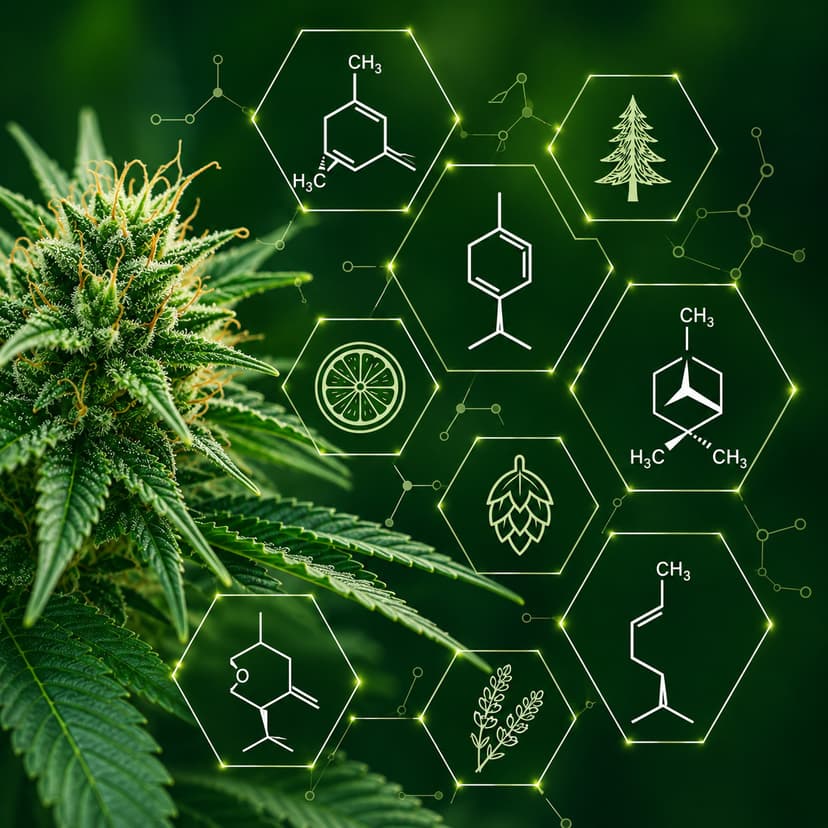
Terpenes play a key role in shaping the characteristic aroma of cannabis and may also influence functional properties through the entourage effect. The individual terpene profile of a sample provides valuable information for research, medical applications, product development, and quality assurance. Using modern GC-FID analytics, we determine terpene profiles with precision and reproducibility. The analysis covers 73 different terpenes and enables a well-founded assessment of the aromatic composition of your sample.
INSTRUCTIONS FOR THE TEST PROCEDURE
It is important that the sampling is carried out according to our instructions. For invalid tests resulting from incorrectly taken samples, the costs must be borne by the customer.
Which plants should be tested, when, and at what intervals can be found in our guide to the testing strategy.
Our terpene analysis covers 73 different terpenes to determine the individual terpene profile of your sample. We use GC-FID analysis, which delivers precise and reproducible results. The profile allows a well-founded assessment of the aromatic composition, whether for product development, quality assurance or research.
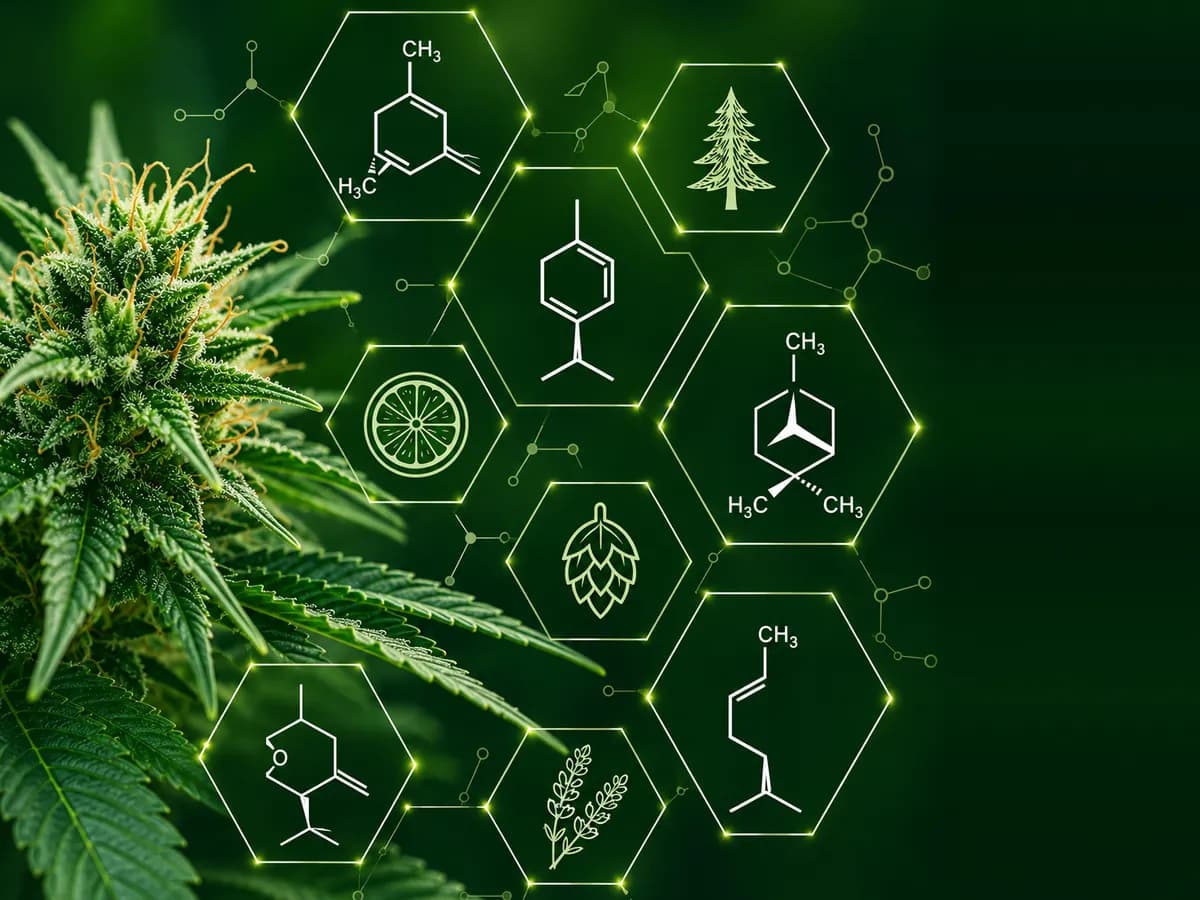
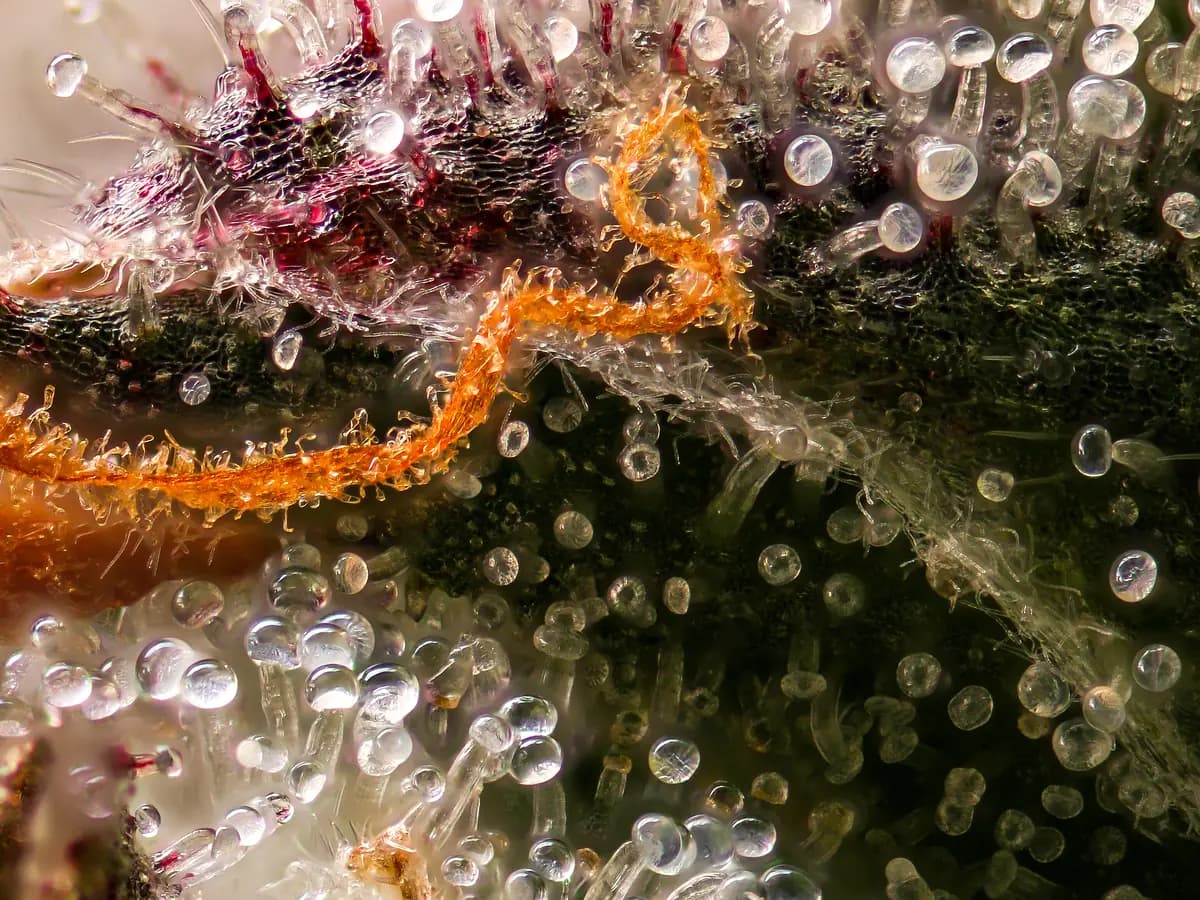
Terpenes are volatile aromatic compounds produced by plants and are chemically built from isoprene units. In nature, they protect plants from herbivores or attract pollinators. The scent often reveals where terpenes are present. Limonene shapes the smell of citrus peel, pinene that of conifers, and hops and lavender also owe their aroma to these compounds. In cannabis, terpenes form in the trichomes, the same place where cannabinoids are produced. They are largely responsible for a strain's characteristic aroma.

What exactly is terpene content? It refers to the amount of individual terpenes present in a sample. Only the ratio of terpenes to one another forms the terpene profile, a kind of chemical fingerprint of the aroma. Both values change. Genetics, growing conditions, harvest time, drying, and storage all affect how many terpenes are retained. Light monoterpenes in particular evaporate quickly. A terpene analysis therefore records the composition of your sample at the time of testing.

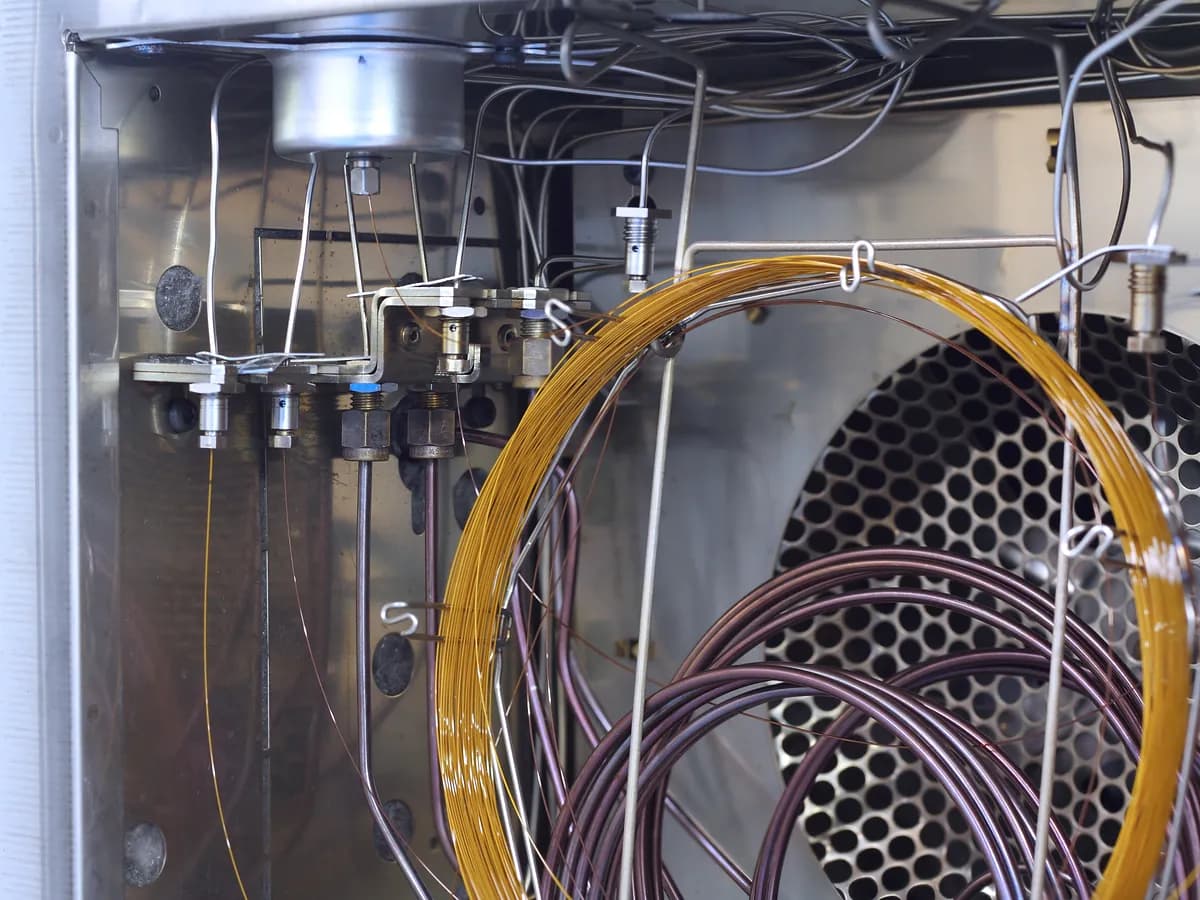
The human nose can recognize aromas but can't quantify them. In our terpene analysis, this is done by gas chromatography with flame ionization detection, or GC-FID. The volatile components of a sample are separated in a column; the detector then captures the 73 terpenes in our analytical range and determines the amount of each. Precisely because terpenes are so volatile, gas chromatography is particularly well suited to measuring them. The result is a quantitative profile rather than a mere description of the smell. Cannabinoids, by contrast, we analyze by HPLC.

Combined with our cannabinoid analysis, which quantifies eleven naturally occurring cannabinoids, you get a comprehensive picture of your sample. For other natural products, we offer kratom analysis and kanna analysis.
A breeder has twenty phenotypes from a new cross in the greenhouse. They all smell fruity, but only one is to become the mother plant. Terpene analysis reveals how different the profiles actually are and provides an objective basis for decision-making alongside the subjective impression of the scent. Producers of extracts and end products use the terpene profile to develop formulations and verify consistent aroma from batch to batch. Process steps can also be evaluated, for example by comparing samples before and after drying and storage to quantify terpene loss. Retailers document the profile of their goods transparently and describe strains in a verifiable way. For research, terpene analysis provides reproducible data that can be compared across samples and time periods.
You order the terpene analysis, like all our compound analyses, as a regular item in the shop. You then enter the sample name, batch number, and material in our sample management database and send us your sample. Since terpenes are sensitive to heat and air, careful sampling contributes significantly to meaningful results. If needed, we'll discuss suitable sample types and what to consider when shipping with you in advance. Results are usually available within 10 days of sample receipt. Your test certificate is then ready to download. As a B2B customer, you can publish it directly on your product pages and make the terpene profile of your goods visible to your customers.
Our team has an academic background and works with state-of-the-art lab equipment and methods. Our results are measurements you can rely on and trace. You'll have a direct contact person who knows your samples and requirements. Whether it's a single sample for a development project or regular series for batch comparison, we adapt flexibly to your needs. We always handle your data and samples discreetly.
HANCO CHEM serves businesses in Austria, Germany, and across Europe. Would you like to make terpene profiles a fixed part of your quality assurance? We're happy to discuss your plans via our contact page.
The entourage effect refers to the hypothesis, discussed in research, that terpenes in combination with cannabinoids may influence the pharmacological effect profile. This has not been conclusively established scientifically. Our terpene analysis determines the chemical composition of a sample. We make no statements about effects.