Our analytical laboratory offers qualitative and quantitative determination of the main alkaloids in psilocybin-containing mushrooms using high-performance liquid chromatography (HPLC) with diode array detection (DAD). The relevant tryptamine derivatives psilocybin, psilocin, baeocystin, norbaeocystin, and aeruginascin are detected. The method enables precise separation and identification of these substances based on their characteristic absorption spectra and retention times. Scope of services: - Drying of the sample material to constant weight - Gentle extraction of the alkaloids and chromatographic separation - Qualitative and quantitative determination of the main alkaloids - Issuance of a certificate with concentration data (wt. %) Area of application: The analysis enables the chemical characterization and quantitative determination of psilocybin in mushroom samples. It can be used in research and also contribute to health prevention by helping to rule out the unintentional ingestion of psilocybin-containing mushrooms.

INSTRUCTIONS FOR THE TEST PROCEDURE
It is important that the sampling is carried out according to our instructions. For invalid tests resulting from incorrectly taken samples, the costs must be borne by the customer.
Which plants should be tested, when, and at what intervals can be found in our guide to the testing strategy.
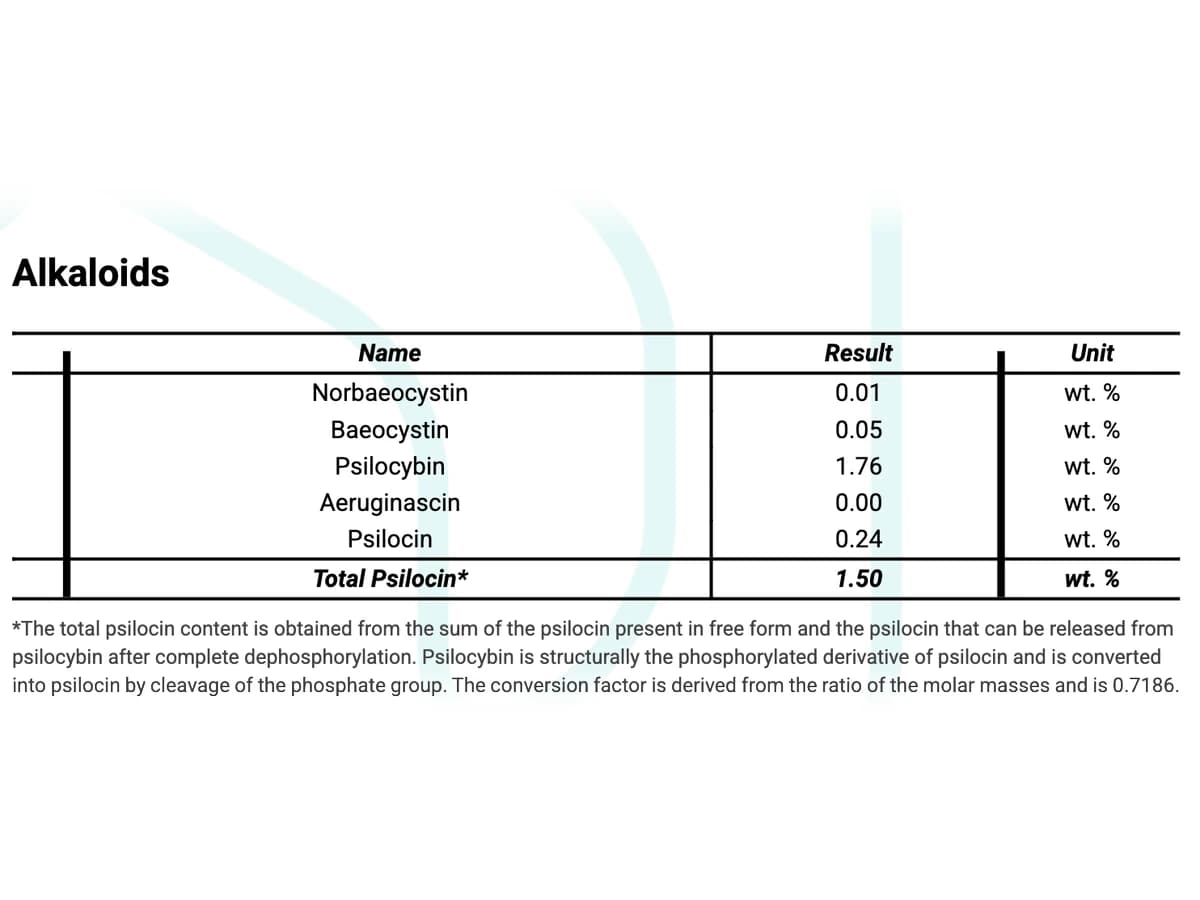
We offer qualitative and quantitative determination of the main alkaloids in psilocybin-containing mushrooms. The analysis covers the tryptamine derivatives psilocybin, psilocin, baeocystin, norbaeocystin and aeruginascin. When testing psilocybin with us, you receive not just a single value but the full profile of all relevant alkaloids in the sample.
Many mushroom species look almost identical, and once dried or ground, even the last visual distinguishing features disappear. Whether a mushroom contains psilocybin cannot be reliably determined from its color or shape. On top of that, the content varies widely even within a single species. Reliable answers come only from psilocybin testing with a method that cleanly separates the individual alkaloids. For commercial mushroom products whose source material is no longer recognizable, chemical analysis is the only reliable option anyway.

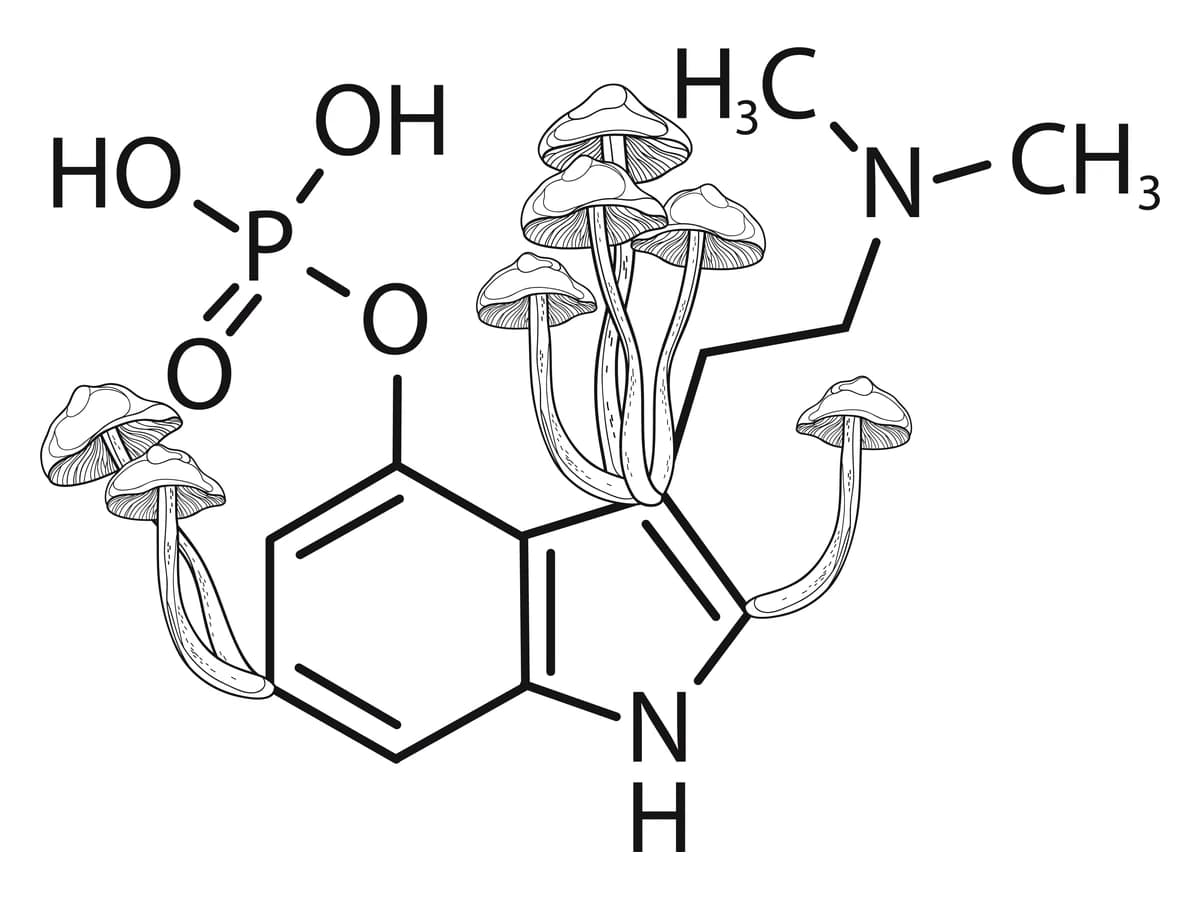
The active compound psilocybin occurs in numerous mushroom species, most famously in the genus Psilocybe. Species from genera such as Panaeolus, Gymnopilus, Inocybe and Pluteus can also produce it. These mushrooms usually contain related tryptamines as well. Baeocystin and norbaeocystin are considered precursors in biosynthesis; aeruginascin is a structurally related derivative. Psilocin, in turn, forms when the phosphate group is cleaved from psilocybin. That is why, when we test for psilocybin, we always capture the full alkaloid spectrum.

Alkaloid concentration depends on species, origin, growing conditions, the part of the mushroom and storage. Even fruiting bodies from the same culture can differ significantly, and the oxidation-sensitive psilocin degrades under poor storage conditions. Estimates from the literature are therefore of little help. Reliable figures only come from determining the psilocybin content of the exact sample in question. Because we dry the material to constant weight before measurement, results from different samples can be compared. Regular psilocybin testing shows you, for example, how strongly storage time or drying method affects the content.

Psilocybin is not the only compound we measure by HPLC. Our kratom analysis uses the same approach to determine mitragynine and 7-hydroxymitragynine, and our kanna analysis focuses on the alkaloid mesembrine. For cannabis products, we offer cannabinoid analysis, which quantifies eleven naturally occurring cannabinoids.
A company selling wellness products receives a shipment of dried, ground mushrooms from a new supplier. The goods look unremarkable, but nobody can tell by eye whether they accidentally contain psilocybin-bearing material. A laboratory mushroom analysis provides clarity before the raw material is processed further. This is one of its key benefits. The analysis can support health prevention by helping to rule out unintentional ingestion of psilocybin-containing mushrooms. In research, it is used for characterization, for instance to compare alkaloid profiles across strains or species. Manufacturers and retailers of mushroom products have their goods analyzed to safeguard raw materials and end products and to document their quality assurance transparently. Anyone working with varying suppliers can have psilocybin tested for each new batch of raw material and archive the results as part of their goods-in documentation.
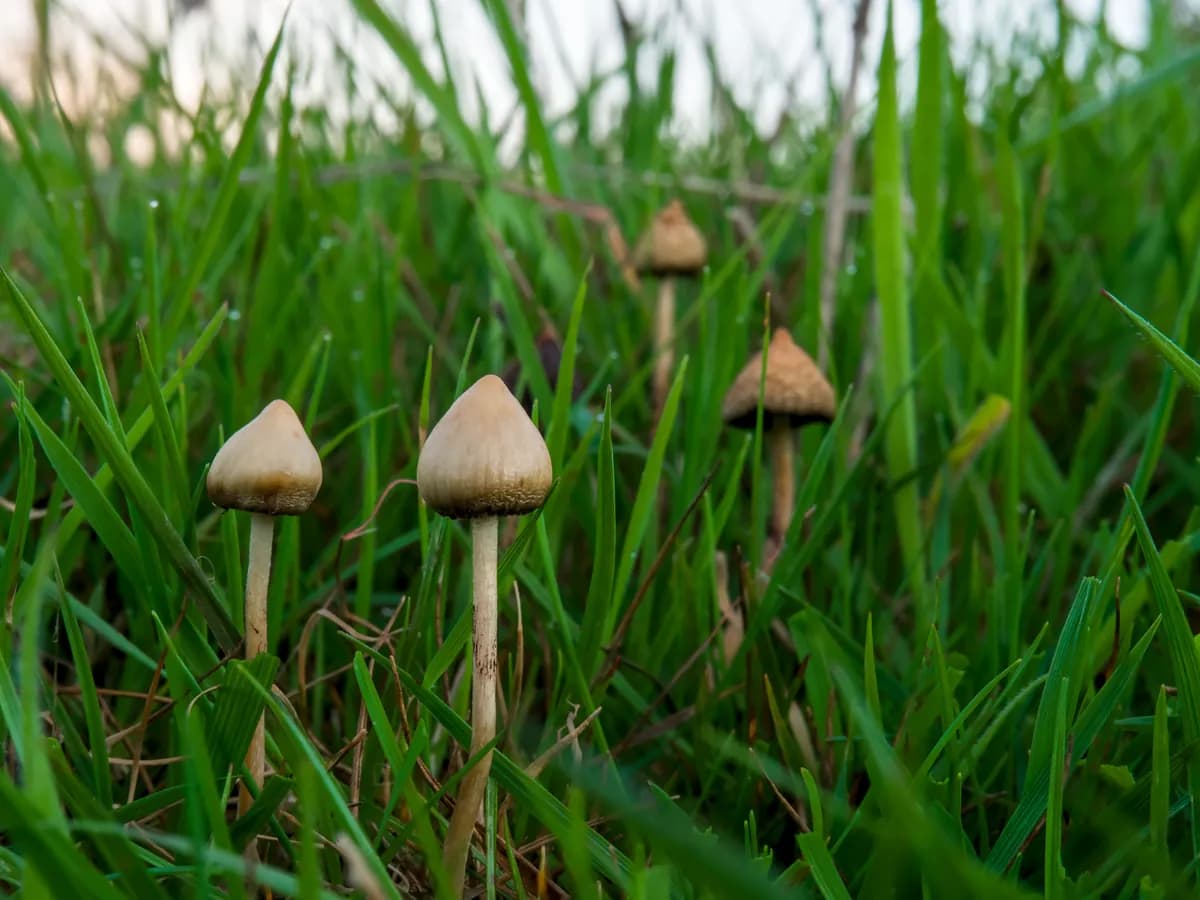
An analysis that measures only psilocin shows just part of the picture. Psilocybin is the phosphorylated form of psilocin, and some of it can convert during drying or storage. If only one of the two substances is measured, the total content may be underestimated. Then there are baeocystin, norbaeocystin and aeruginascin, which occur in varying proportions depending on the species. That is why it makes sense to measure psilocybin and determine the related tryptamines at the same time. The test certificate lists the concentrations of all five substances. You can see at a glance whether a sample contains psilocybin at all and what its alkaloid profile looks like. For comparisons between batches, suppliers or cultures, this level of detail adds real value. In research projects, it allows differences between species, growth stages or storage conditions to be documented quantitatively.
You order the psilocybin analysis, like all our compound analyses, as an item in our online shop. You then enter the sample name, batch number and sample material in our sample management database. If you're sending several samples, consistent naming is worthwhile so you can clearly match the results to your batches later. To test psilocybin reliably, we need sufficient sample material. If needed, we'll discuss the required amount and suitable sample types with you in advance.
At HANCO CHEM, we dry the sample, extract the alkaloids and measure psilocybin along with the other tryptamines. Results are usually available within three days of receipt. Your test certificate is then ready to download and documents every measured value in a traceable way.
With sensitive substances, expertise and trust matter equally. Our team has an academic background and works with state-of-the-art lab equipment and methods. Discretion is a given for us, both in handling your samples and your data. Instead of anonymous processing, you have a direct contact person who understands your inquiry and responds flexibly to special requirements. Every sample is tracked from receipt to test certificate. Especially with regulated substances, this transparency is the basis for trust.
Whether it's a single research sample or routine raw material checks, we tailor the process to your needs. HANCO CHEM works for research institutions and companies in Austria, Germany and across Europe. If you have questions, you can reach our team via the contact page.
Psilocybin is regulated in Austria, Germany and many other European countries. Our analyses serve research, quality assurance and health prevention, not consumption. Please send us sample material only in accordance with applicable legal regulations. Private individuals can also have legally purchased mushroom products tested for quality control, for example if it is unclear whether a product might unexpectedly contain psilocybin. For companies in the industry, this preventive approach is also an important contribution to ensuring that only properly tested goods reach the market.
Timing matters here. If you want psilocybin tested to rule out unintentional ingestion, you should of course have the analysis done beforehand.
Our analysis determines the chemical constituents, not the mushroom species. It shows whether and in what concentration psilocybin and related tryptamines are present. Botanical species identification requires a mycological assessment.